Ferret Scout Car
Daimler reconnaissance vehicle used by Canada from 1954 to 1981.
ManufacturerDaimlerYears in service1954-1981
History and Service Notes
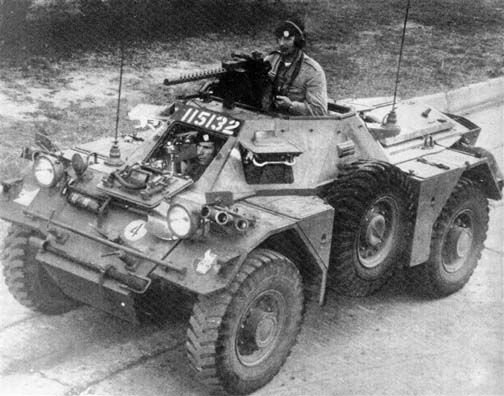
The Ferret armoured car, also commonly called the Ferret Scout Car, was a British armoured fighting vehicle designed and built for reconnaissance purposes. It was produced between 1952 and 1971 by Daimler and was widely adopted by the British Army and Commonwealth countries.
The Ferret was developed in 1949 as a replacement for Second World War light armoured vehicles. Daimler drew on the success of its Dingo reconnaissance scout car when designing the Ferret.
The Ferret shared many design features with the Dingo and the Canadian Ford Lynx, but it offered a larger fighting compartment and an optional small machine gun turret. It was built from an all-welded monocoque steel body, which kept the vehicle low but made the drive extremely noisy because the running gear was inside the enclosed hull with the crew.
Four-wheel drive and run-flat tires helped the vehicle continue moving even after tire damage. The turret, though not fitted to all models, carried a single machine gun. Six grenade launchers on the hull, three on each side, could carry smoke grenades.
Canada purchased 124 Ferret Mark I Scout Cars in 1954 and used them until 1981.
Technical Specifications
- Crew: 2 (driver, commander/gunner)
- Combat weight: approx. 3.7 tonnes unladen, up to 4.4 tonnes laden
- Length: 3.8 m; width: 1.91 m; height: 1.88 m
- Engine: Rolls-Royce B60 Mk 6A, 6-cylinder petrol, up to 129 hp
- Max speed: 93 km/h (58 mph)
- Range: approx. 310 km
- Armor: 8-16 mm welded steel plate
- Armament: .30 cal Browning machine gun (early marks), later 7.62 mm GPMG; some variants fitted with Vigilant or Swingfire anti-tank missiles